Coffee
Thai Coffee Beans: Understanding Origin, Roast and Flavor
Read a Thai coffee label with more confidence, from northern arabica and southern robusta to processing, roast and the questions worth asking.
In this story
Thai coffee beans do not have one fixed flavor. Thailand grows both arabica and robusta, and the cup you drink reflects more than the country on the label. Growing location, plant variety, processing, roasting and brewing all give you useful pieces of the picture.
The practical way to approach a Thai coffee is to ask where it comes from, how it was processed, and what style of cup it is intended to make. This guide explains those questions. It is background on coffee grown in Thailand, rather than a list of Baboon’s suppliers or a promise about which beans are currently available.
Start with Thailand’s two broad growing stories
Arabica is closely associated with northern Thailand’s highlands, while robusta has an important presence in the south. Thailand’s Department of Agriculture documents arabica work in Chiang Mai and identifies southern provinces including Chumphon and Surat Thani with robusta cultivation. These are useful geographic starting points, not boundaries that determine every bean’s flavor.
A country or province gives you context, but it does not replace information about the individual coffee. Two lots from the same area can be handled differently, roasted differently and brewed for different purposes. The label becomes more useful when it tells you the producer or lot as well as the broader origin.
Avoid treating arabica and robusta as a complete quality ranking. They are different coffee types with different characteristics, and the quality of the final cup also depends on how the coffee is grown and handled. The Bank of Thailand’s discussion of quality coffee explicitly recognizes quality development and competitions for robusta as well as arabica.
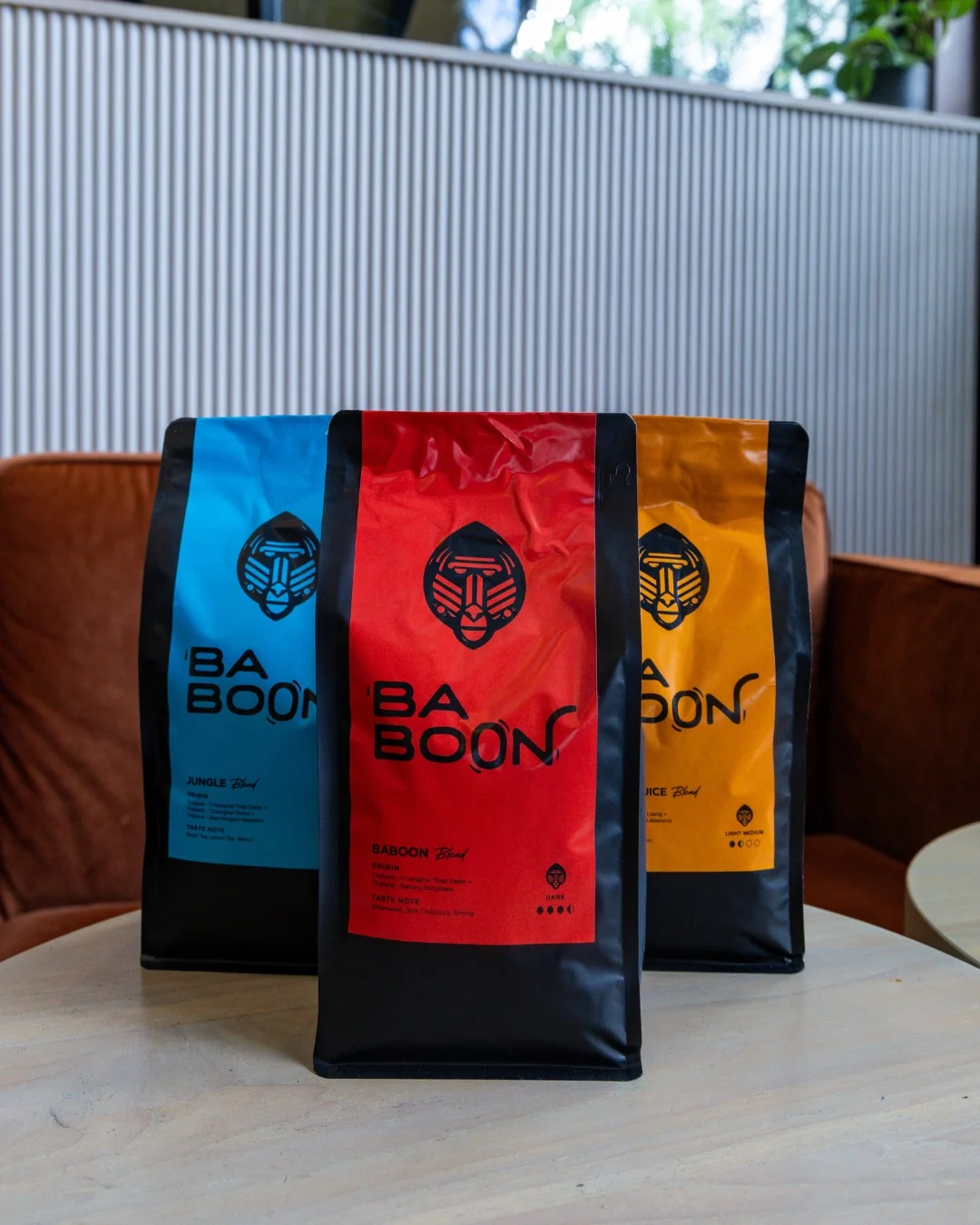
Read the label in layers
| Label detail | What it helps you understand | What it does not prove alone |
|---|---|---|
| Thailand or a named province | The geographic origin being described | A single guaranteed flavor profile |
| Producer, farm or lot | A more specific source | How the coffee will taste in your chosen drink |
| Arabica, robusta or a variety name | Information about the coffee plant | A complete quality score |
| Processing method | How the harvested fruit and seed were handled | An exact sweetness or acidity level |
| Roast description | The roaster’s intended style | A universal standard shared by every roaster |
| Tasting notes | Flavor and aroma comparisons | A list of added ingredients |
You do not need every field to choose coffee. If only a few details are available, ask the person serving it what they find most distinctive. A clear description of the brewed result can be more helpful to your immediate order than a long list of unfamiliar names.
Processing is a clue, not a flavor guarantee
Coffee beans are seeds inside a fruit. Processing describes the work after harvest that prepares those seeds for drying and later roasting. The Coffee Quality Institute’s education program treats natural, honey and fully washed processing as distinct approaches, alongside other methods.
In broad terms, washed processing removes the fruit layers before the coffee is dried. Natural processing dries the whole cherries. Honey processing removes the skin and pulp but retains some or all of the sticky mucilage during drying. These distinctions are described in the International Coffee Organization’s processing glossary.
When reading those terms, use them as a prompt for the next question: “How does this particular coffee taste?” A processing name cannot tell you the entire result. The same broad method can be carried out under different conditions, and the roast and brewing still matter afterward.
Honey processing is a coffee-processing term, not by itself a declaration that honey has been added to the cup. Similarly, descriptions such as fruity or wine-like do not automatically mean fruit juice or alcohol is an ingredient. If you need to know whether anything has been added, ask directly rather than interpreting a tasting note as an ingredient statement.
For a first comparison, keep the drink format the same. Tasting two black coffees prepared in a similar way can help you notice differences more clearly than comparing a milky espresso drink with a large iced coffee and trying to attribute every difference to processing.
Roast and brewing change the conversation
Roast labels such as light, medium and dark are useful shorthand, but they are not a complete recipe for taste. Ask how the person serving the coffee describes the result. “More rounded and chocolate-like” or “more fruit-forward” gives you a practical connection to what you enjoy.
Then explain how you will drink it. A coffee that interests you as a black cup may give a different impression with milk, and a small espresso is a different experience from a longer drink. The relevant question is not whether a Thai bean is good in the abstract, but whether that coffee works for the cup you want.
If you brew at home, mention the brewer before asking about beans. Grind size and preparation need to fit the method. If you are ordering at a cafe, you can leave those technical choices to the person making the drink and focus on the flavor and texture you prefer.

Turn curiosity about Thai coffee into a useful order
At Baboon in Wichit, the drinks menu lists classic coffee options and a single-origin add-on. Ask which origins are currently available and whether there is a Thai coffee you can try in your chosen drink. Do not assume a house blend name identifies its farms or country of origin.
- Ask which coffee is available for the drink you want.
- Ask whether it is a single origin or a blend.
- If origin interests you, ask which growing area is identified.
- Explain whether you enjoy rounded, bitter, bright or fruit-like flavors.
- Choose one feature to notice while drinking rather than trying to score everything.
A useful tasting memory can be as simple as “I liked this with milk” or “I would prefer less brightness next time.” Our specialty coffee ordering guide offers more ways to describe those preferences. If you are curious about manual brewing, the slow bar guide covers the questions to ask about available methods.
Keep origin curiosity separate from sourcing assumptions
Learning about Thai coffee can make a cafe visit more interesting, but it does not establish a business relationship between a cafe and a farm. A regional story, an image of coffee cherries or a familiar blend name is not evidence of a particular supplier. Ask about the coffee being served.
Baboon is in Wichit, behind Three Monkeys. Use the contact page for a question about current beans before a visit, or book a table if you are planning a coffee-and-food gathering. The useful result is a cup you understand a little better and would enjoy ordering again.
Thai coffee bean questions
Are all Thai coffee beans arabica?
No. Thailand grows arabica and robusta. Northern highlands are associated with arabica, while southern Thailand is an important robusta-growing area.
Does a Thai origin guarantee chocolate or nut flavors?
No. Origin is one part of the description. Processing, roasting and brewing also affect the cup, so ask about the individual coffee.
Do tasting notes mean flavorings were added?
They usually describe comparisons in aroma and taste. Ask separately about added ingredients if that distinction matters to you.
Which Thai beans does Baboon use?
Confirm current availability with the team. This educational guide does not identify Baboon’s suppliers or make claims about the origin of its blends.
Origin and industry references
Background sources include Thailand’s Department of Agriculture on arabica in Chiang Mai, its coffee crop information, the Bank of Thailand’s discussion of quality coffee, and the Coffee Quality Institute’s processing education.