Coffee
Slow Bar Coffee in Phuket: A Beginner’s Ordering Guide
Learn what a slow bar means, what happens during a manual brew, and how to ask about beans, serving style and available methods.
In this story
A slow bar usually refers to coffee prepared individually with a focus on manual brewing and the details of each cup. For someone searching for slow bar coffee in Phuket, the useful questions are practical: which methods are offered, which beans are available, and what kind of drink will arrive?
At Baboon in Wichit, start by checking the drinks menu and asking the team about current brewing options. The published menu does not identify a specific manual coffee brewer. If your visit depends on a particular method, confirm it before travelling. This guide explains the ordering conversation rather than promising equipment or a service that has not been listed.
What “slow bar” tells you, and what it leaves open
The phrase points toward an approach to preparation, but it is not a precise recipe. One coffee menu may use it for manually poured filter coffee; another may group several drinks under a similar heading. Ask what is actually being served instead of expecting the term alone to answer that question.
Slow is not a guarantee that the cup will be better, stronger or larger. It suggests there may be a more individual brewing process to discuss. Your own preference still matters: some people love a longer black coffee, while others would rather have a concentrated espresso or a milk drink.
The more general specialty coffee guide explains how to describe your taste. Here, the focus is the next step: understanding what happens during a manual brew and how to choose without needing to become the person holding the kettle.
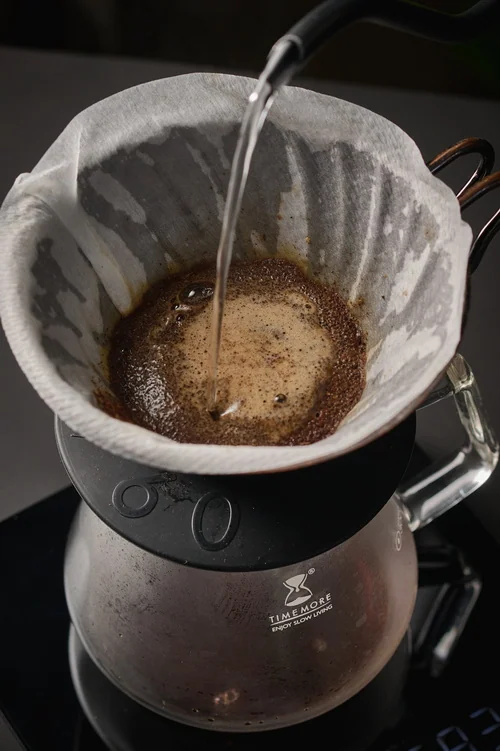
A pour-over, explained without the equipment lecture
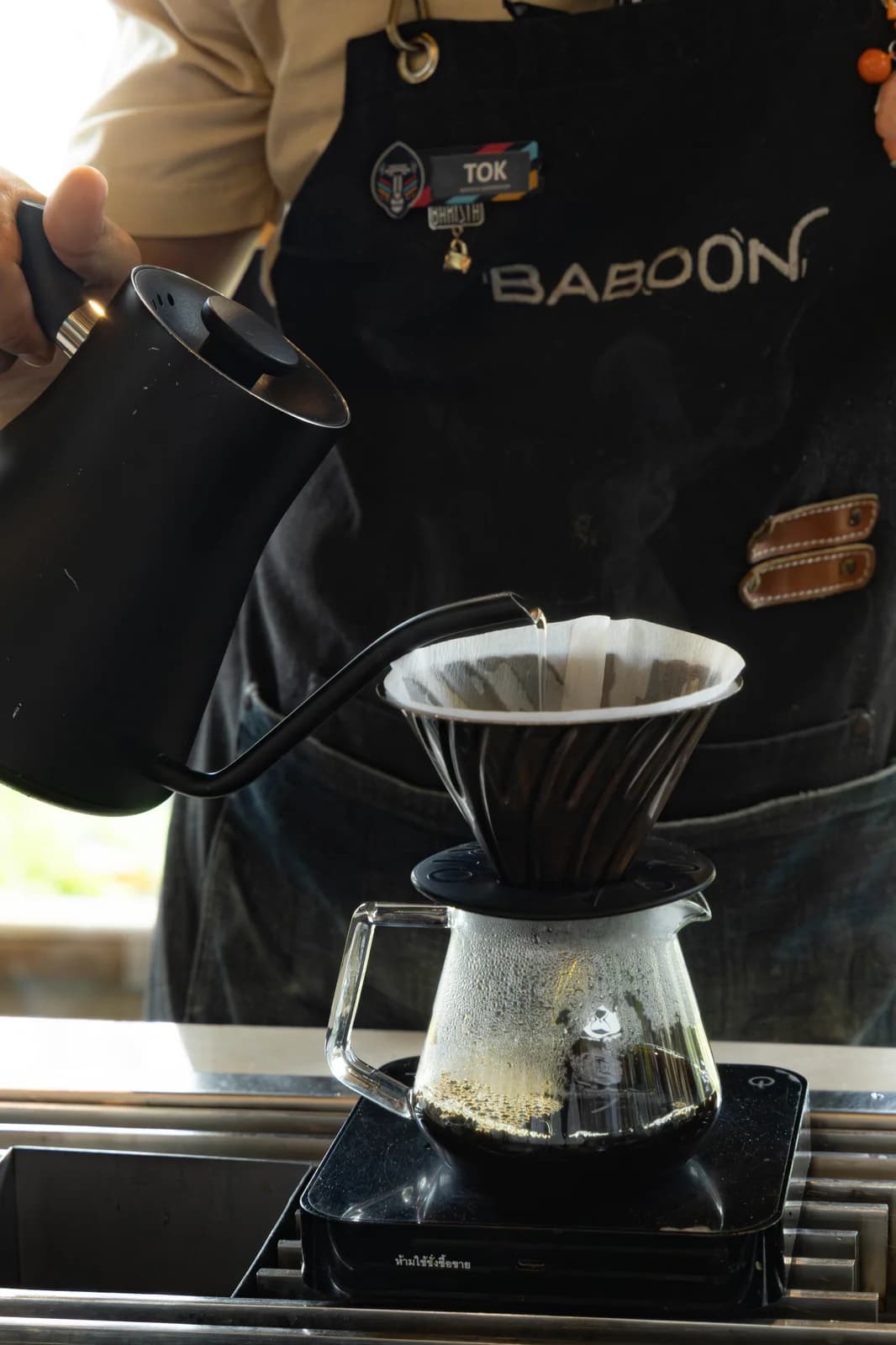
In a pour-over, water passes through ground coffee held in a filter, and the brewed liquid collects below. The person brewing controls the water addition rather than simply filling the cup. Hario’s V60 guide provides a clear example: prepare the filter, measure the coffee, wet the grounds, then add more water in a controlled pour.
You may hear the first wetting stage called the bloom. It is one part of a brewing recipe, not a separate drink. A scale and timer help the brewer keep track of quantities and time. Watching those tools can be interesting, but you do not need to evaluate the technique to enjoy the result.
V60 is an example of a pour-over brewer, not a name for all manually made coffee and not a confirmed Baboon offering. If a cafe offers another method, ask what that changes in the finished cup. A practical answer about texture or serving size is often more helpful than a comparison of equipment shapes.
The four questions that make ordering easier
| Question | Why it matters | Helpful detail to give |
|---|---|---|
| Which methods are available? | Establishes what can actually be ordered | Say if you have come for a particular method |
| Which beans would suit me? | Connects the choice to your taste | Describe a flavor you enjoy or dislike |
| How is it served? | Clarifies temperature, size and whether it is intended for sharing | Say whether you want hot or cold coffee |
| How long should I allow? | Connects preparation to your schedule | Mention any fixed departure time |
Ask about actual service time rather than assuming that “slow” means a standard wait. Brewing is only part of the process; the queue and preparation also affect when your coffee reaches the table. If you are in a hurry, explain that before choosing.
Pick a direction, then let the brewer work
A first manual coffee order does not need a demand for the rarest bean or the most elaborate preparation. Begin with a taste direction: rounded rather than sharp, fruit-like rather than heavily roasted, or simply a black coffee that is easy to enjoy.
If there is more than one bean available, ask for a brief comparison. “This one feels fuller; that one is brighter” may be enough. If you are curious about origin, our Thai coffee bean guide explains why country, process and roast are separate parts of the story.
You can then leave grind size, pouring pattern and recipe adjustments to the person making the coffee. Those choices belong to preparation. Your role is to communicate what you want and notice whether the finished cup suits you.
How to taste the cup without turning it into a test
Take a careful first sip when the temperature is comfortable. Notice broad impressions before searching for specific fruit names. Does it feel light or full? Is the finish pleasant? Would you want another sip? These answers tell you more about your enjoyment than trying to match every tasting note.
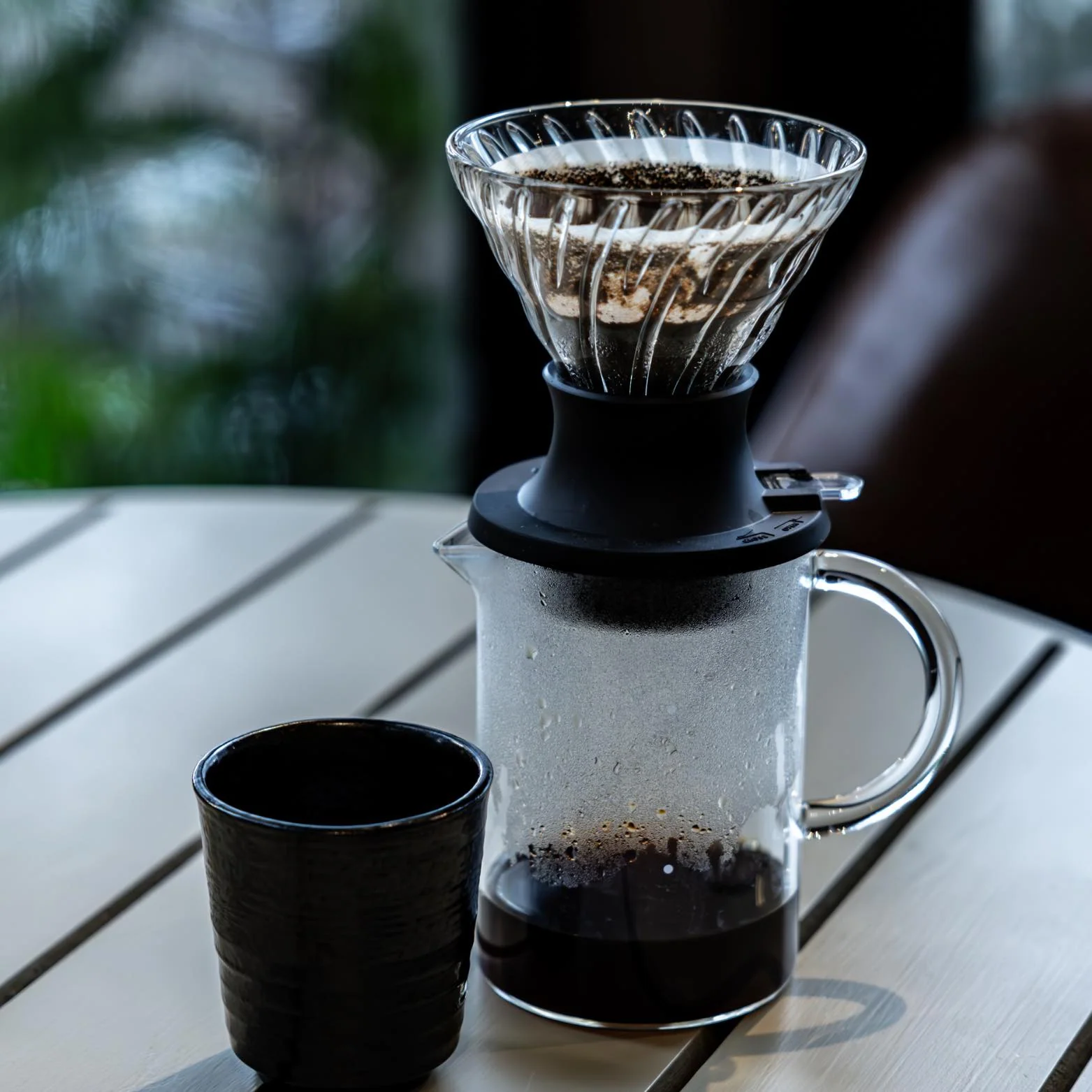
Try it again as it cools naturally. You may find different flavors easier to notice at a more comfortable drinking temperature. If it arrives in a server, pour a manageable amount into your cup and follow any serving guidance you are given.
- Notice aroma before adding anything.
- Use one or two ordinary words to describe the first impression.
- Compare a later sip rather than rushing the whole cup.
- Keep a note of the coffee name if you want to remember it.
- Say what you enjoyed when asking for a future recommendation.
You are allowed to prefer milk or sweetness. If you want either, mention that while ordering so the team can guide you toward a suitable drink. If your purpose is to notice the coffee on its own, try a small plain sip first, then decide how you want the rest.
Cold brew is a different question
A slowly prepared coffee is not automatically a slow-bar pour-over. Cold brew uses a different preparation approach and is listed separately on Baboon’s menu. If you want a cold drink, ask whether you are choosing cold brew or another coffee served cold; those names describe different things.
Likewise, do not use preparation time to estimate caffeine. The coffee, recipe and serving matter. Baboon’s menu includes a decaf cold-brew option, but confirm availability and understand that decaf still contains some caffeine.
Build the visit around the coffee you want
If a particular manual method is essential, send your question through the contact page before heading to Wichit. If you are simply in the mood for a cafe visit, you can choose among the listed drinks once you arrive. Pair your cup with something from the food menu if you are hungry.
Baboon is behind Three Monkeys. Use the location details to plan arrival, and reserve a table for a gathering. A rewarding coffee visit can begin with one clear question and finish with a preference you can describe more confidently next time.
Slow bar questions
Does slow bar always mean pour-over?
No. It is a broad description rather than a fixed recipe. Ask which methods are offered and how the chosen drink is served.
Does Baboon list V60 or another manual brewer?
The published drinks menu does not identify a specific manual coffee brewer. Confirm current options with the team before planning a visit around one.
Do I need to understand grind size to order?
No. Describe the flavor and serving style you want. The person brewing can handle the technical preparation.
Is slow bar coffee stronger than espresso?
“Stronger” can mean taste intensity or caffeine. Ask about the specific preparation rather than drawing a conclusion from the brewing category.
Brewing reference
Hario’s V60 brewing guide illustrates one manual pour-over method. It is a general brewing reference, not a statement about equipment used at Baboon.